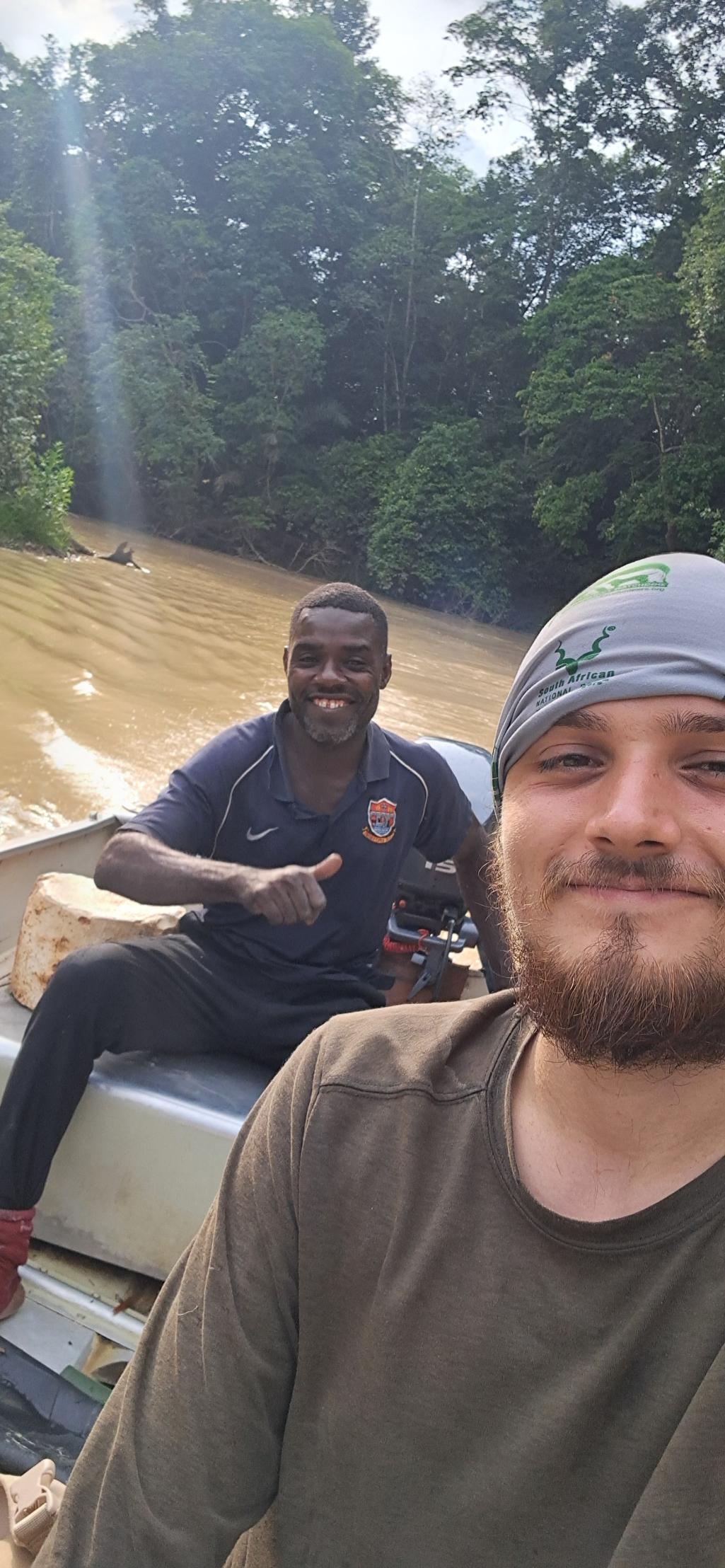
During all of my years studying biology I never imagined I’d find myself walking through the rainforest with an Ivorian buddy laughing until we’re out of breath imagining the ways in which the pygmy hippo strolls through the woods. And yet, there we were! Hello all, my name is Jop Kempkes and I’m a Dutch masters student who spent the last three months living in Taï Forest to study the pygmy hippopotamus as part of the IBREAM team. A notoriously cryptic and bizarre species, but that sense of challenge is exactly what drew me to this project in the first place. And challenging it was! Now that I’m back in Europe, I’d like to share a few insights into my humble contribution to pygmy hippo research.
The Road to Taï
The morning I stepped on the airplane in Brussels, I actually briefly got to see the first snow of 2025. You can imagine the stark contrast when I got my first taste of the hot and humid Abidjan atmosphere only a few hours later – it just instantly knocked all energy and coherent thoughts out of my system!
Furthermore, it’s not all that easy to suddenly leave your familiar language bubble. Standing at the Ivorian customs, with my ears still adjusting to the air pressure, I got my first taste of Francophone Africa when the visibly annoyed immigration officer tried to explain to me that I wasn’t pressing my fingers firmly enough on the fingerprint scanner. In the end she opened a small hatch, slapped my hand with my own passport, and manually fixed the issue herself. “Okay”, I thought to myself, “Is this how it’s going to be for the entire mission?”
I’m glad I got to acclimatize for a few days at the guest house of the CSRS (Centre Suisse de Recherches Scientifiques en Côte d’Ivoire), IBREAM’s Ivorian partner organization. With the help of a fellow pygmy hippo enthusiast Hermann Digbeu (the newly appointed postdoctoral fellow leading the pygmy hippo program on the ground) I was able to swiftly find the last remaining items on my shopping list in the bustling city. A few days later I loaded my four heavy backpacks into a car headed for the rainforest.
Scratches, Bruises, and Ticks
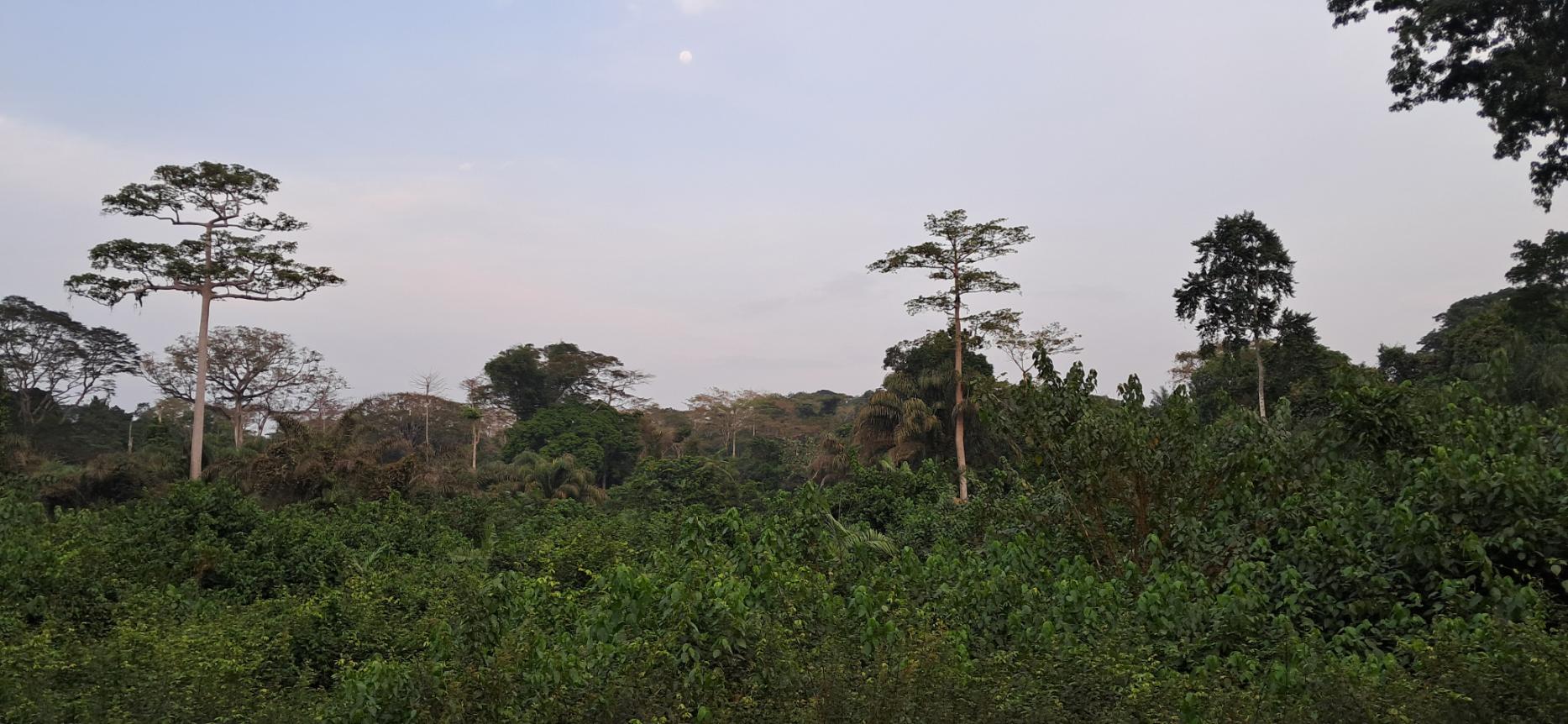
With the main research zones in Taï National Park located along its western edge, and Abidjan to the east, it’s always the question of whether you’ll loop the park around the north or the south. Our driver insisted on entering via the north and we obliged, spending one night in the eponymous village of Taï. Not that it matters a lot: the larger highways in Cote d’Ivoire are well-paved, but the final, dreadfully slow kilometers in the proximity of the forest were spent on the bumpy orange paths through rubber, cacao and palm oil plantations. Every now and then, a large rice paddy would allow for a slightly wider vista. One such time one unfathomably large tree in the middle of the field remained, presumably because it was too sturdy to axe. Truly majestic to the mind of a European who spent his entire life dreaming of the rainforest, but also a somewhat lonesome sight: I’ll admit to having shed a tear.
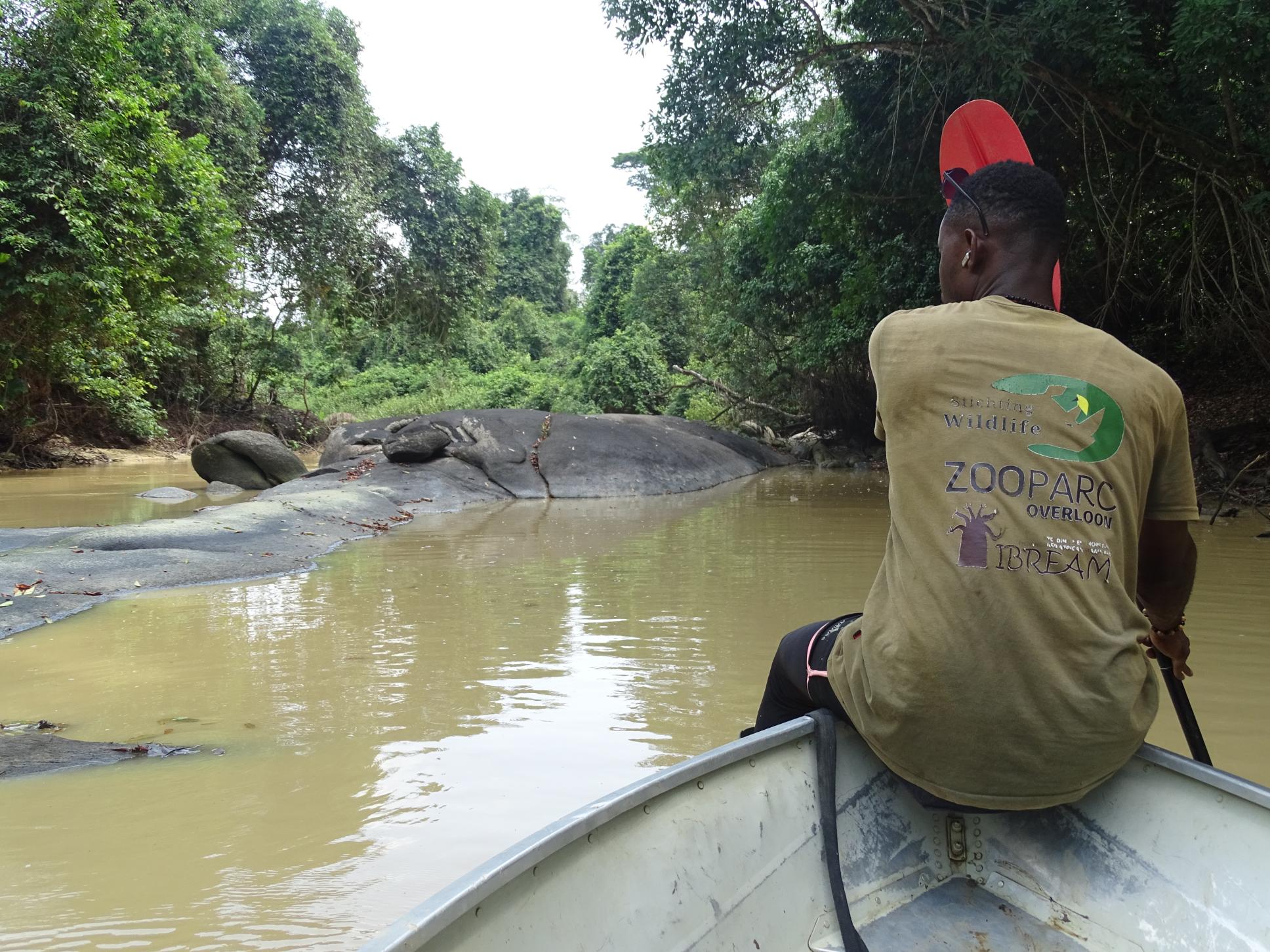
After being greeted by a traditional Kruman welcome (consuming cola nuts, peppers and palm whine), the chef-secteur (the local ranger chief) rapidly matched we with an experienced guide to help get my project underway: Innocent Toile. We were hosted by Taï Forest Lodges and were stationed at Ecotel Touraco, situated on the western coast of the Hana-Momo river junction. This means that every morning we got to paddle a canoe across the quiet waters to enter the forest – a scenic start to the day, and to my great surprise no electronics were ever hurt in the process.
Of course it took quite some time for me to find my footing in the rainforest. I might be a lot younger than Innocent, but I was the one repeatedly begging for more pauses and water! Stubbing my feet on tree roots, getting tangled in and tripped over lianas, scratching my hands on thorns and collecting ticks that aren’t impressed by European tick-removal methods: after just five days I was a bloody, bruised and exhausted mess.
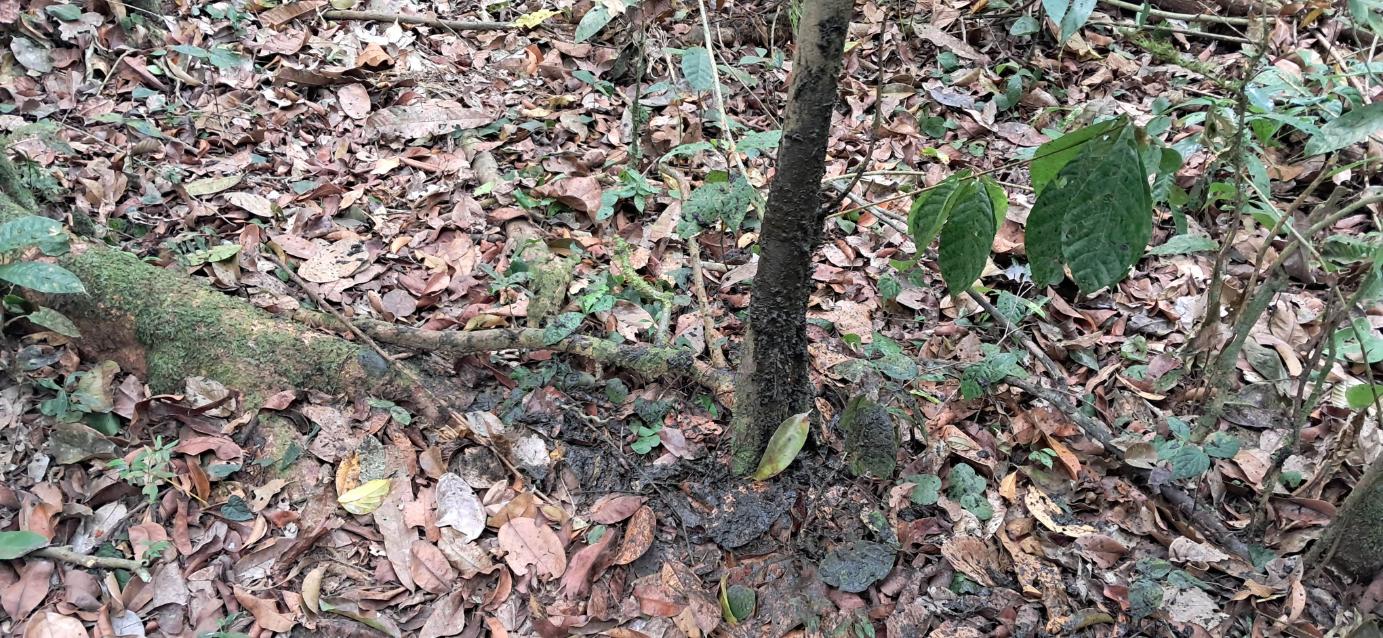
The one thing that was off to a smooth start: searching the pygmy hippo. Already on our very first day in the rainforest we found two very fresh feces, and in the weeks that followed we rarely had a day without more signs of activity. As much as the pygmy hippo is poorly understood, their signs are actually quite hard to miss: they are the only animal leaving four-toed imprints, and they are the only animal to (usually) spray their feces onto the vegetation. At worst some of their older, rain-washed feces could be confused for those of the forest buffalo, though the texture is still quite distinct.
Despite never specifically having been on a pygmy hippo research assignment before, it turned out that Innocent has a great eye for spotting their feces and even estimating their age (which I could corroborate having studied fecal degradation in captivity and by having IBREAM’s standardized age classification chart in mind). As time progressed, I increasingly started contributing my own finds to the dataset and returning from the forest with slightly less injuries. We soon learned the importance of these skills, as the permit for the detection dog crew never materialized and that side of the program was suspended. We would have to rapidly change our planning and above all play the role of detection dog ourselves.
Chimpanzees, monkeys and hippos
While Ecotel Touraco has it perks – notably internet and refrigeration – it has one big disadvantage for the purposes of systematic research: you must always go east. After a month we had covered all the areas that were feasible to reach and we decided the move to Camp Chimpanzee, approximately 5 km deep into the rainforest. As one final activity while based at Ecotel, we decided to collect some camera traps we had set out earlier along a small forest creek. The first one had over 200 activations – a borderline suspicious amount, and sure enough the majority could be attributed to rustling foliage and a resident mouse. Nevertheless, footage of a family of red river hogs and white-breasted guineafowl is always fun to see.
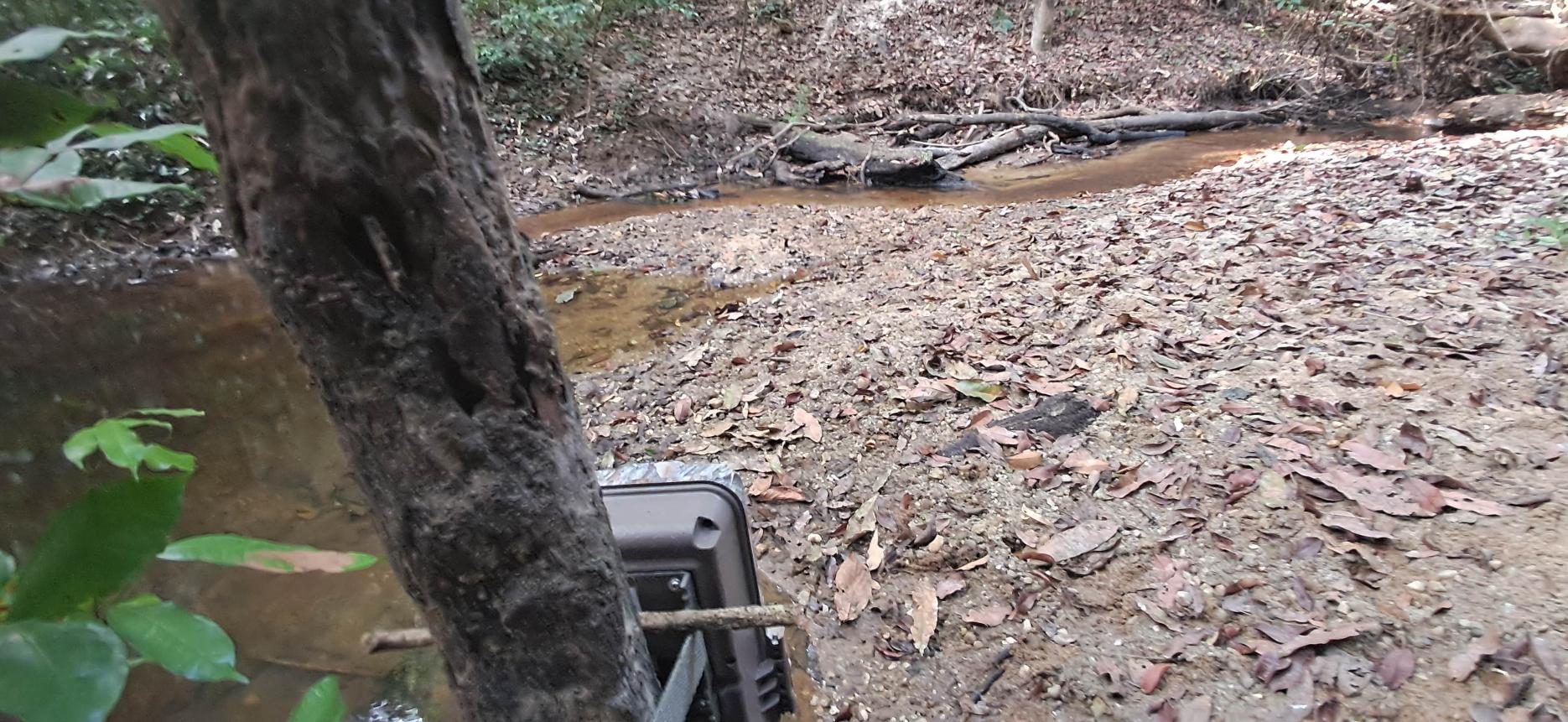
The other two cameras were positioned in a more difficult to reach area further upstream, where the conditions were marshier and thornier. Earlier on Innocent and I had spent almost two hours following a trail of relatively fresh imprints and feces in this area, holding our breaths for fear of chasing away anyone. To be specific we had positioned these two camera traps along a suspected animal trail in a zone where fallen branches made ‘free’ navigation almost impossible. Quickly scrolling through the footage on the first camera, we already spotted some gems on the small display, including a daytime visit by a Jentink’s duiker and a white-necked picatharte. But alas, still no pygmy hippos. Finally arriving at the second camera (which my GPS initially had mislocated by 30 meters), I had already let go of any serious hope. Scrolling through the footage, we had caught some mangabeys, a few duikers – WOW! A shiny, grey, slightly bumpy patch of skin close-up to the camera: unmistakably a pygmy hippo! A second video, recorded just two minutes later, even shows a second, larger pygmy hippo walking in the same direction. By now, through 1.5 additional months of camera trapping, we can confirm that this mother-daughter duo visits this particular marsh regularly!
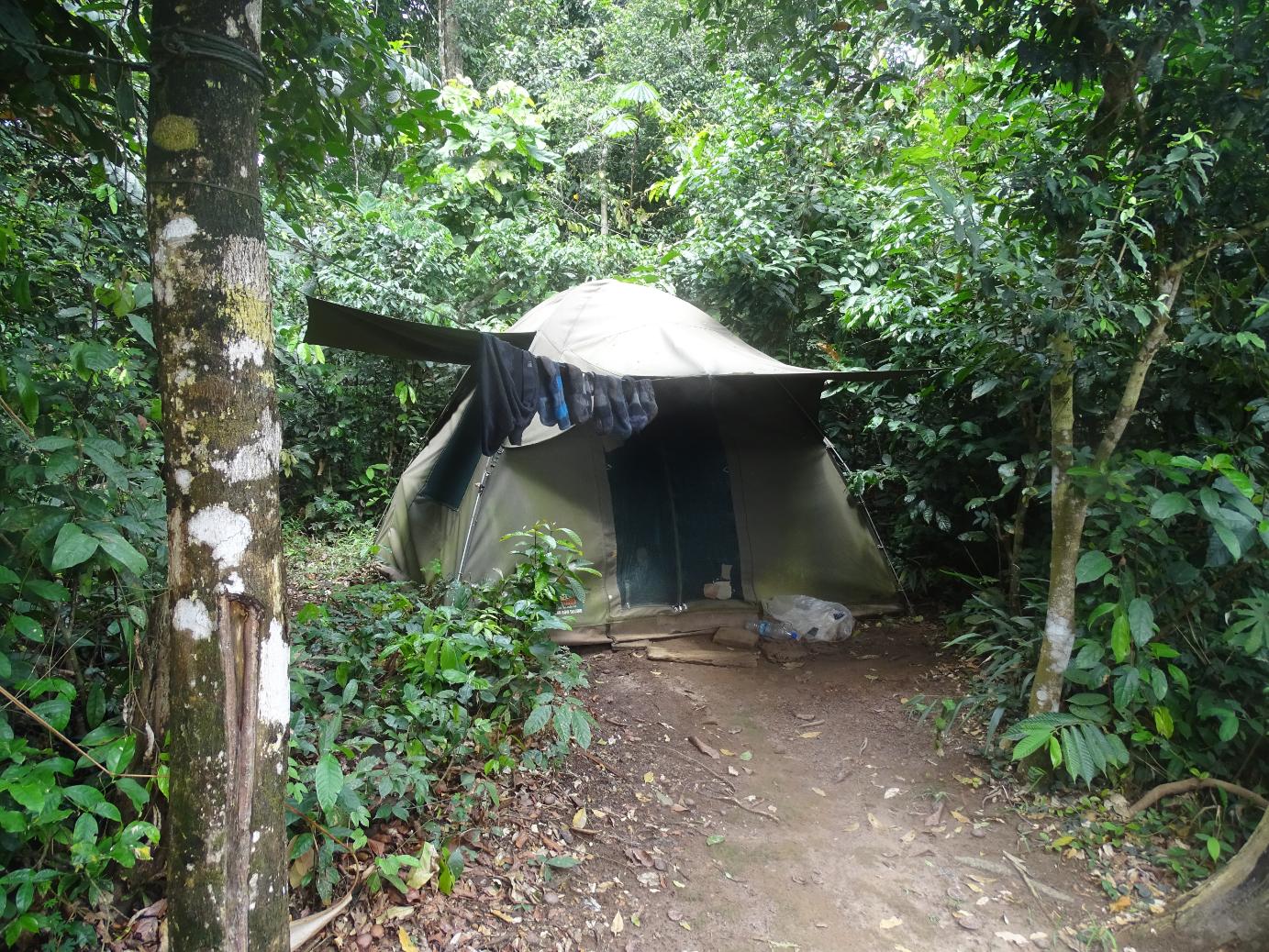
This find was a great energy boost as we shifted the project to Camp Chimpanzee. We received a warm welcome from the Djouroutou ‘chimp ladies’ of the Max Planck Institute, who even let me accompany them one morning to see the habituated chimpanzee group go about their morning routine. Even though my diet regressed from ‘largely rice’ to ‘solely rice’, the sheer magic of being woken up by the song of the black-and-white colobus and the great blue turaco above my tent more than made up for the decrease in amenities! Being at the centre of a network of trails sprawling out from the camp also helped us to more easily do our work in the forest.
Lazy, Crazy Forest Life
We ended up spending the majority of my remaining time in Taï NP working from Camp Chimpanzee. One of the major incentives for doing so: the apparent density of pygmy hippos in this zone. It is no exaggeration to say there are some trails where you can’t walk ten meters without finding pygmy hippo feces. These densities are truly unlike anything we have seen while walking through the bush itself. My project focusses on the way the occurrence patterns of the pygmy hippo, as measured by fecal densities, vary as a result of the variation in landscape and vegetation. Of course these « toilettes hippopotames » are of huge interest to me. Are they using these clearings as territorial borders? Or could it be that, as Innocent and I loved to put it: « les hippos aiment le luxe » ?
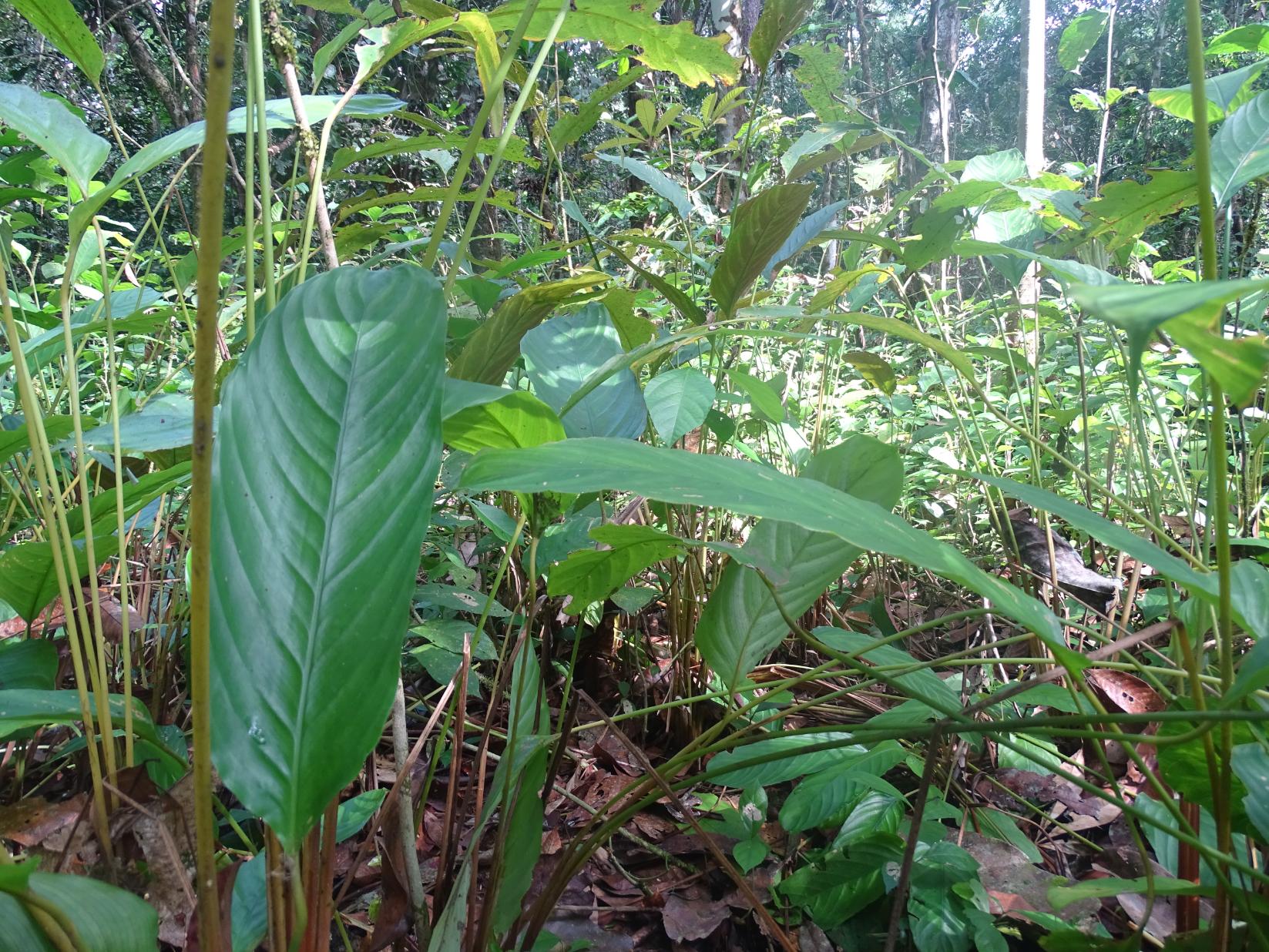
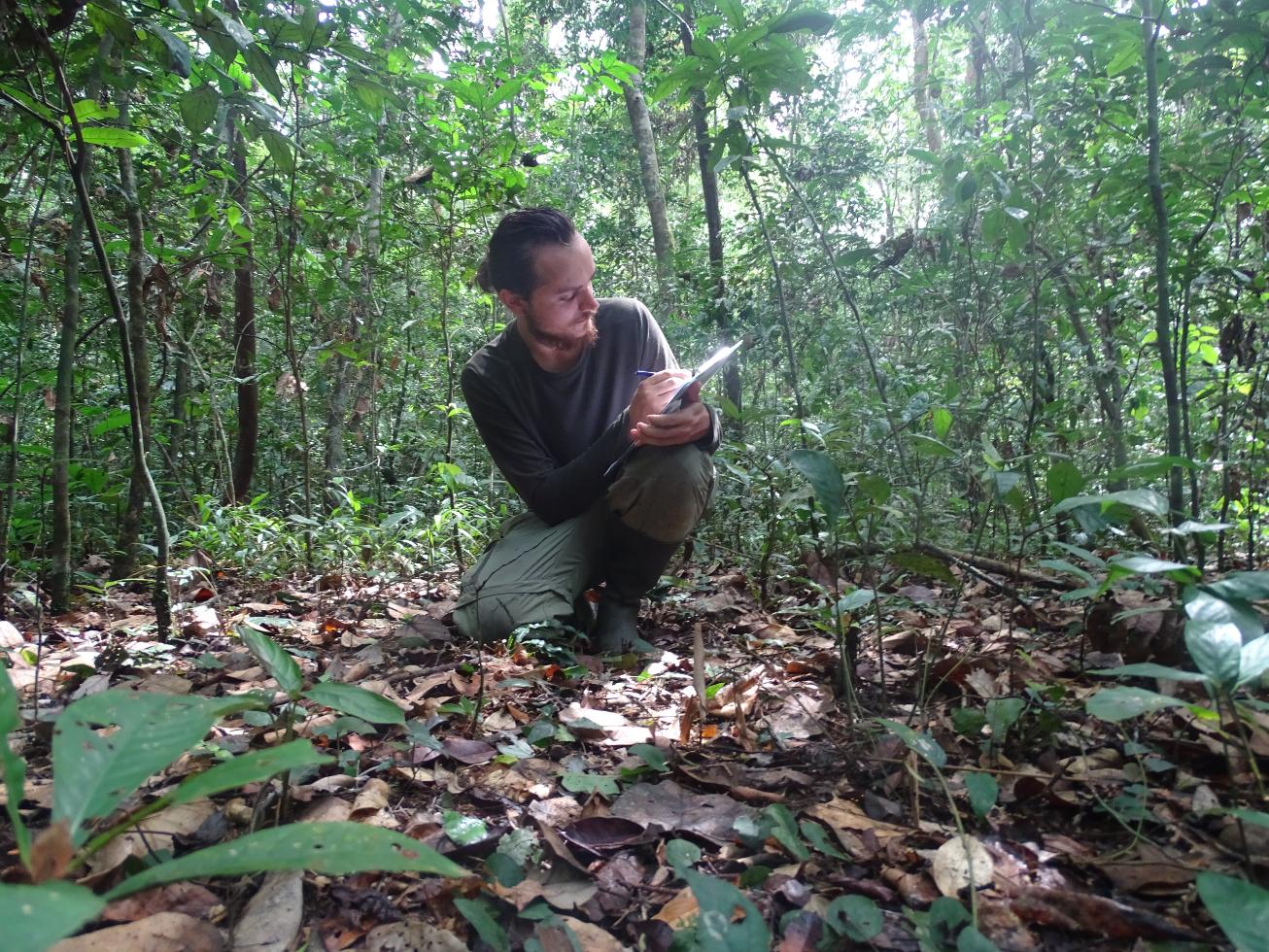
This notion of the pygmy hippo preferring the easy life recurred as we captured more and more camera trap footage of them and gathered some rare direct feeding observations, which generally revealed a preference for small herbaceous plants (« salade d’hippo ! ») rather than shrubs with tough branches. However, even within these small and superficially similar herbs, it seems like they very carefully differentiate between species, leading me and Innocent to conclude that the pygmy hippo surely is a more gifted botanist than the two of us combined. Of course, not for a lack of trying – I’ve been on all fours almost daily to try to understand the rainforest from the eyes of the pygmy hippo, and I’ve also dreamed about it more than once.
There are many more things I could say about my time in Taï NP – from precarious run-ins with snakes and being confronted with poaching to exploring the Hana by boat and attending an educational event at the village school. I could’ve stayed for years and still be learning new things about the rainforest! Unfortunately, as the rainy season rolled in, it became evident that the time for our feces-centered data collection was drawing to a close. Now it’s time to analyse our findings, which of course I will share in due time. It fills me with joy that ‘my’ work in Djouroutou will serve as the baseline for further pygmy hippo research by IBREAM, the Centre Suisse and the Rotterdam Zoo. I would like to sign off by sharing some of the camera trap videos by which I will forever remember these magical last three months.
À la prochaine, Côte d’Ivoire!