
IBREAM is headed into the jungle once more! This February, IBREAM will oversee a fieldwork mission to Taï National Park, one of the largest remaining rainforests in West Africa. And for those of you who don’t know this yet: Taï National Park is one of the homes of the pygmy hippo, which is one of our species we are focussed on protecting. The goal of this expedition is to put our newest research techniques to the test in the challenging conditions posed by the rainforest. So, how are we going to do this?
Trial (and error?)
We have been busy at IBREAM: we created a custom-made GPS collar for pygmy hippos, our so called ‘HippoEdge’. However, before using the collar on actual pygmy hippos in the wild, we first need to test it in the environment where pygmy hippos live. It’s a dense rainforest and therefore we need to know how the signal will be. Our collar will be left up to 48 hours at a time under the canopy as we monitor its performance, to make the test as realistic as possible.
In the meantime, the team will not be sitting idly by – au contraire! Because of the pygmy hippo’s secretive nature, only few researchers have tried to directly observe them. Recently, however, we received a tip from our partners at Taï Forest Lodges regarding a stretch of forest that receives particularly many nighttime pygmy hippo visits. Using state-of-the-art night vision goggles, our team will try to answer one question that could change the very nature of pygmy hippo research: can the pygmy hippo be directly observed after all?
Meet the team!
Our two Ivorian participants, Elie Bogui and Hermann Digbeu, both did their PhD on the pygmy hippo, and have been loyal public advocates for pygmy hippo conservation through journalistic outlets such as France24 and Mongabay. Mark van Heukelum was among the first IBREAM students to go to Taï Forest in 2010 and since then worked on engaging a wide audience with wildlife conservation, including through the well-known Dutch ‘Fish Doorbell’. Jop Kempkes joined IBREAM more recently, establishing a baseline for multi-year pygmy hippo monitoring in IBREAM’s new research zone in Taï National Park near Djouroutou village in 2025. Last but not least, we are joined by field assistants Innocent Toile and Kevin Tanguy, who both know this specific corner in Taï National Park like the back of their pocket.
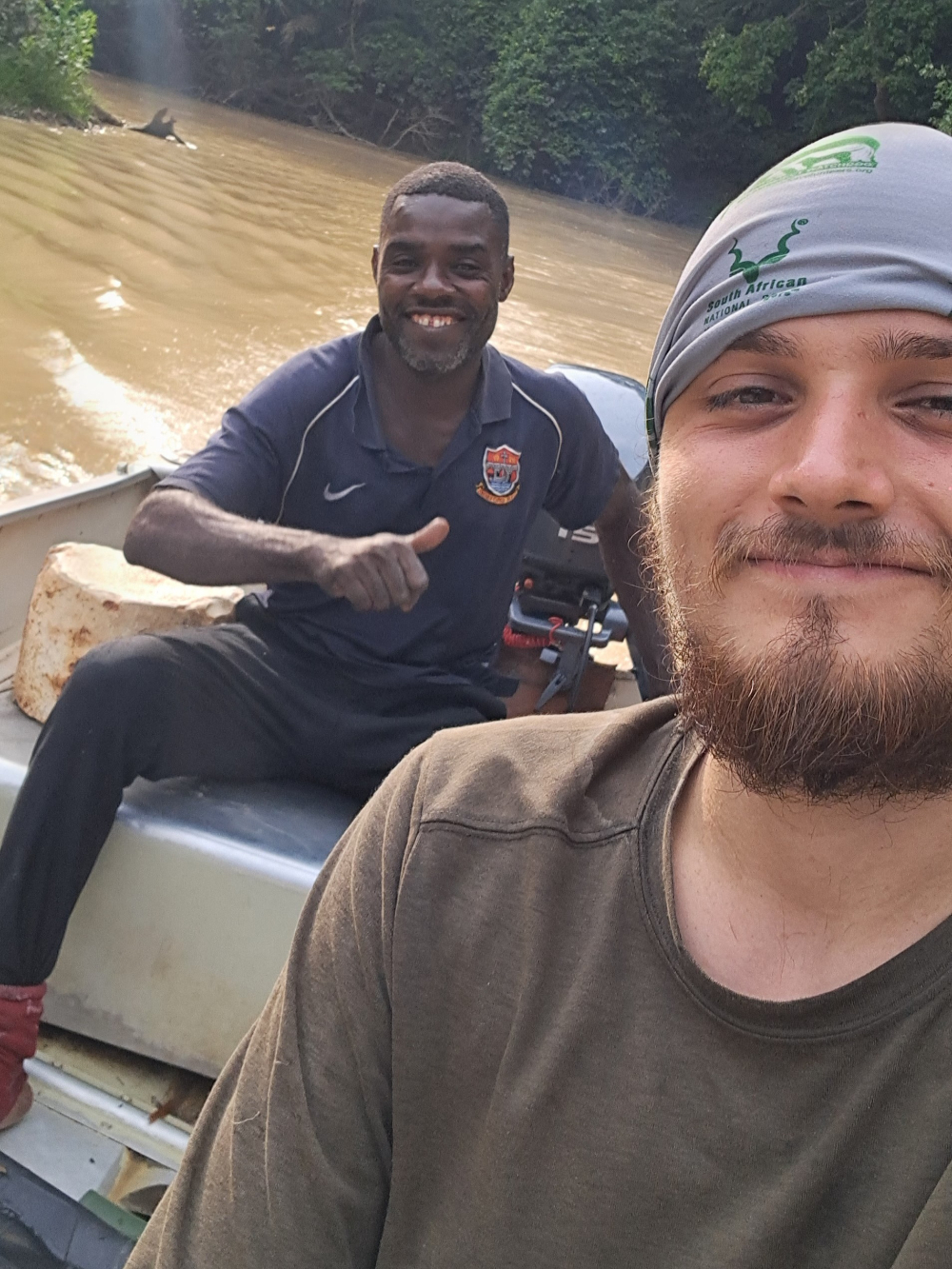
During the course of 3 weeks our team will be in Ivory Coast, testing and searching. Do you want to keep updated of this exciting journey? Be sure to follow us on our social media!
The Taï Hippo Project, a joint initiative between IBREAM and the Ivorian research institute CSRS, is the longest ongoing scientific initiative that is specifically aimed at gaining conservation-critical insights into the pygmy hippo. The 2026 fieldwork mission is made possible by the Rotterdam Zoo and ZooParc Overloon.